
When it comes to submitting documents for official purposes, accuracy and legitimacy are non-negotiable.
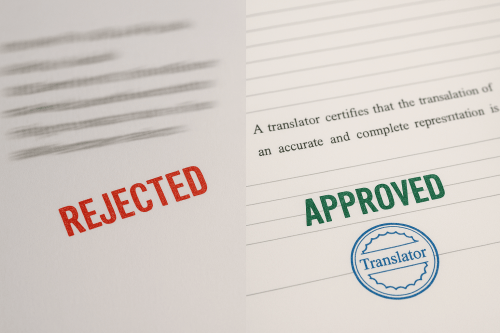
Yet, many individuals misunderstand what a certified Japanese translation actually is — and this confusion often leads to rejections, delays, or legal complications.
In this article, we’ll clarify what makes a translation “certified,” explain why it matters, and show how professional translation services protect you from the risks of unreliable or self-certified translations.
What Is a Certified Translation?
“Official translation” is an umbrella term that includes certified translation, sworn translation, notarized translation, and apostilled translation – Each with distinct requirements depending on the country and purpose. Certified translation is the only type of official translation where Self-Translation is in limited cases acceptable (but more about that later.)
Certified translation must include a signed Statement of Certification, also known as a Certificate of Accuracy. This statement guarantees that the translation is a true and faithful representation of the original document.
In common law countries such as the United States, the United Kingdom, and Australia, any professional translator or company can issue a certified translation by providing this statement. It serves as a legal declaration of accountability and professionalism, assuring institutions that the translated content is accurate and complete.
Without the signed Statement of Certification, even a flawless translation cannot be considered certified. That single missing element could mean your documents are rejected by government agencies, universities, or embassies.
To dive deeper into the technical and legal details, see What is Certified Japanese Translation – The Definitive Guide
The Risks of Self-Translation and Misguided Advice
Social media is full of well-meaning but misleading advice about official translation services. For example, one user in a popular online thread claimed to have self-translated their own documents for years without issue, simply signing their name as the translator.
While this might sound convenient, it completely misrepresents what a certified translation truly means.
In a few countries such as the United States self-translation is technically possible, but even then, acceptance is never guaranteed. Approval depends on the reviewing authority, and rejections are common.
Here are two important caveats to keep in mind:
- Limited Acceptance: Only a few jurisdictions permit self-certified translations. Most countries require certification from a qualified professional translator or company.
- No Guarantee: Even where self-translation is accepted, officials can reject it if the format, accuracy, or accompanying documentation fails to meet strict standards.
When dealing with visa applications, legal filings, or academic records, a rejected translation can lead to serious delays and unnecessary costs. Relying on casual advice from social media may seem convenient; but, it puts your entire application or process at risk.
Why Professional Certified Translation Services Matter
Using professional certified translation services in Tokyo, Japan ensures that your documents meet every formal requirement from the start. Certified Japanese translators understand the expectations of embassies, universities, and government offices.
They provide the proper Statement of Certification, maintain formatting consistency, and guarantee compliance with official standards.
By choosing a qualified provider, you’re not just buying a translation — You’re securing peace of mind. Instead of risking rejection or confusion, you can trust that your documents are both accurate and legally recognized.
Get Certified, Get accepted.
Avoid uncertainty and ensure your documents are approved the first time. Contact professional certified Japanese translation services
 INTEGRATED LINGUISTIC SOLUTIONS &DISCUSS